
DREAMS BEYOND BOUNDARIES
- Ajuli Tulsyan
- Dec 19, 2025
- 4 min read

From a small, obscure town to a life shaped by books, borders and belief, Geeta Canpadee’s journey is a testament to resilience, curiosity and quiet courage

A Childhood Where Curiosity Replaced Convenience
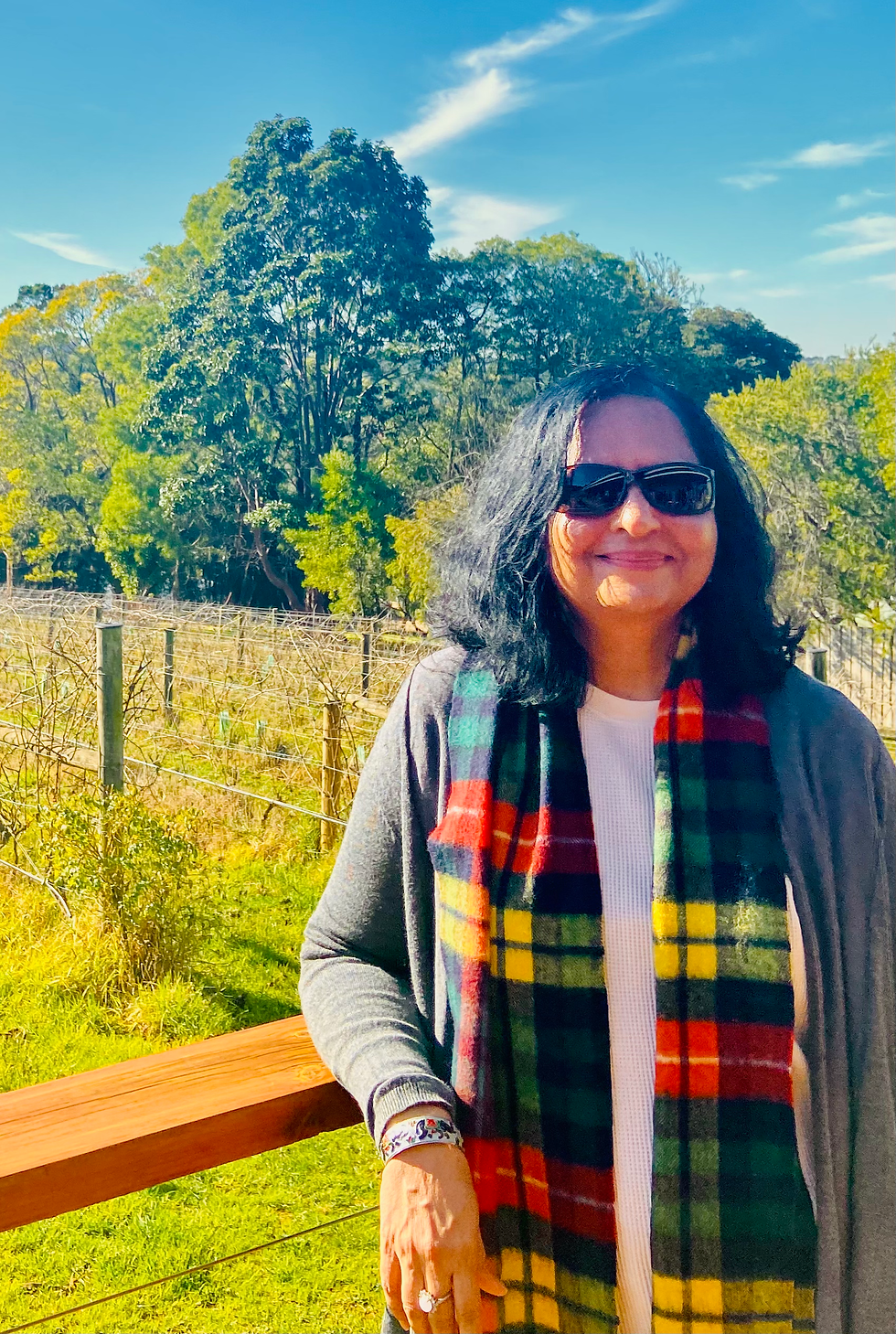
Growing up in Koppal, a small town in Northern Karnataka in the 1970s, Geeta Canpadee’s early world was shaped by scarcity—of resources, access and opportunity. “I grew up in Koppal… hardly visible on India’s map,” she recalls. Her school was the town’s very first English-medium institution, and English itself was a rarity. With no school library and no bookstore selling novels, Geeta turned to what was available. “I read newspapers cover to cover and carefully preserved clippings of significant events to revisit later.”
Language became her earliest window to the world. With Tulu as her mother tongue, she learnt English, Kannada and Hindi simultaneously at school. Once she mastered the scripts, she immersed herself in local magazines filled with women-centric stories, often attempting to translate them into English. This habit of reading, translating and reflecting quietly shaped her worldview. “What seemed right to me could look entirely different from another’s perspective.” Long before the term became popular, this practice nurtured what she now recognises as critical thinking—a defining force in the woman she would become.
Books, Belief and the Power of Manifestation
Whenever Geeta visited larger towns, she bought books in bulk—books that had to last a year or more and were often reread many times. Influenced by these readings, she began writing her own stories and poetry. By the time she completed high school, she had published a children’s novel, Mystery of the Mysterious Cave, which later won the North Karnataka Upcoming Writer’s Award in the English category.
Books did more than educate—they planted dreams.
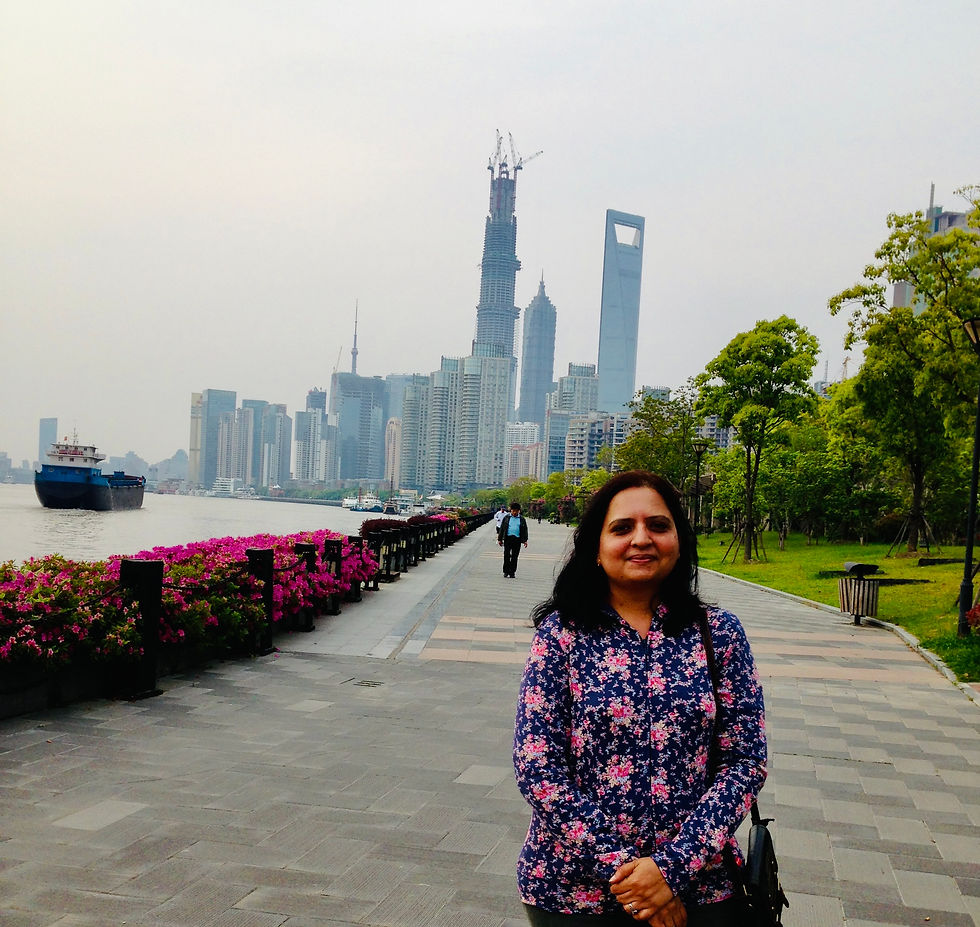
Pearl S. Buck’s The Good Earth ignited her fascination with China. “By the time I finished devouring all her books, I had fallen in love with this country,” she says, imagining its culture without knowing she would one day live there. Similarly, her first glimpse of Bombay’s skyscrapers made her wonder what it would be like to live “amongst the clouds.” Decades later, she found herself living on the 56th floor in Shanghai. Reflecting on these moments, Geeta firmly believes, “You manifest and it will materialise.”
Crossroads, Choices and a Reframed Destiny
Academically, Geeta was a rank student in Bio-Chemistry, but her path was shaped by the realities of her time. In those days, excelling in school almost automatically meant choosing science. Her heart leaned towards literature, creative writing or journalism, but small-town colleges offered none of these options. City campuses existed, yet for girls, the absence of hostels and safe accommodation made them inaccessible. She pursued Physical Sciences close to home and secured a rank, but at the crossroads that followed, the choices were heavy.
Societal expectations positioned marriage as security, a promise that education or career could follow later. When she met a partner with a transferable job, the decision felt less like compromise and more like possibility. “Marriage became my leap of faith, my ticket out of the confines of a small town, and into a wider world waiting to be discovered.”
Rather than seeing marriage as a limitation, Geeta reframed it as growth. She viewed it as “a partnership built on shared vision and mutual support,” one that demanded resilience, empathy and adaptability. Constant movement, new environments and frequent independence helped her evolve into a woman confident in her ability to manage life on her own—learning new languages, adapting to diverse cultures and stepping out of her comfort zone with purpose.
A Life Across Borders, Guided by Kindness
From Chennai to Mumbai, Kolkata, China and now Malaysia, every relocation brought its own challenges. Yet, Geeta met them with courage and openness. In her memoir Colours Red, Green and Everything Inbetween, she reflects on how people from all walks of life—house helpers, street vendors and strangers encountered during everyday routines—shaped her understanding of humanity. “When you make eye contact, smile, and attempt to connect, barriers dissolve,” she observes, noting how simple gestures ease adaptation and foster belonging.
Among all the cities she has lived in, Kuala Lumpur transformed her the most. Arriving there, she encountered a society where Malay Chinese, Malay Indians and the indigenous Bumiputeras coexist seamlessly—sharing language, festivals and lives. In her chapter The Melting Pot, she writes about this vibrant fusion, discovering echoes of both India and China within Malaysia.
Geeta’s philosophy is simple yet enduring, “to leave behind a happy footprint—so that when I move on, people remember me as ‘that lady who was kind.’” It is a belief rooted in courtesy, generosity and everyday humanity.
For young women in small towns who still feel constrained by circumstance, her message is clear. While acknowledging that opportunities have expanded significantly since the 1970s, she urges girls to prioritise education and financial independence. Success, she believes, does not follow a single definition. It lies in choosing work you enjoy and that sustains you—whether as a teacher, professional, artisan or agriculturist. Marriage, she adds, should remain “one possibility among many, not the defining goal.”

Her memoir, Colours Red, Green, and Everything In Between, carries this vision forward. Through reflections on daughters, domestic workers and her own early years, Geeta hopes to ignite possibility in girls from small towns and villages—girls like herself. “Dreams may not unfold overnight,” she writes, “but with persistence and hope, they will find their way into reality.” And if even one reader sees her own reflection in this journey, Geeta believes the purpose of her story will have been fulfilled.


