REVEL IN THE MONSOON CHARM OF RANTHAMBORE!
- Sharmila Chand
- Aug 12, 2025
- 5 min read
Updated: Aug 13, 2025
Ranthambore National Park in the monsoon is a symphony of rain-soaked landscapes, diverse wildlife, vibrant greenery and historical charm

Whether you are an avid wildlife lover or a nature enthusiast looking to enjoy the monsoon season, Ranthambore is one destination that will fulfil your desire to the hilt. The natural beauty of the Park, combined with the thrill of spotting elusive wildlife, makes it ideal for a memorable experience.With the first showers, the arid landscape turns a vibrant green, and the ponds and lakes are revived. As a result, the flora and fauna get a new lease of life, rendering a happy sight all around.

“A trip to Ranthambore during the monsoon season offers a unique blend of natural beauty, wildlife adventures and peaceful moments. The lush green landscapes, combined with the thrill of wildlife sighting and fewer tourists, make for a perfect getaway,” said Ravindra Nath Purohit, General Manager, Aamaghati Wildlife Resort, while taking me for a property round.
“Contrary to the common belief that the monsoon is not the ideal time for wildlife viewing, Ranthambore presents a unique opportunity,” he added. “Zones 6 to 10 of the Park are open during the rainy season, so it is a rare sanctuary for wildlife and nature lovers.”
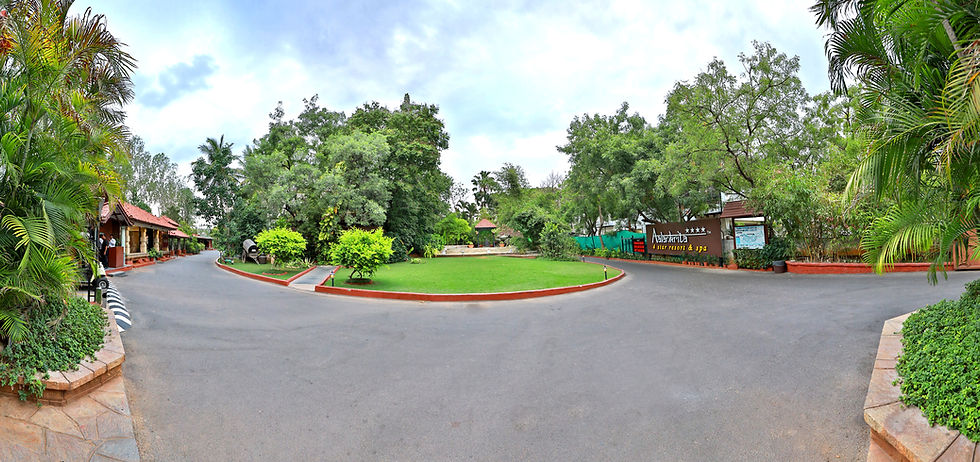
Nestled close to the majestic tiger habitat and embraced by lush forests, Aamaghati Resort perfectly captures the spirit of the jungle. I walk through the ‘Singhdwar’ to enter the reception area, where the walls are adorned with hand-drawn paintings of scenes straight from the forest, not to miss the captivating, huge mural of Trinetra Ganesha, inspired by the ancient Ganesh temple inside the Park.
Wildlife Sightings


At the break of dawn, we are all set for our jeep safari into the forest. Our guide tells us, “The Park is home to an exclusive collection of mammals, reptiles and, of course, birds.”
“While the biggest draw is the big cats — the jungle has a good population of Royal Bengal Tigers and leopards — that doesn’t mean you should not look for other inhabitants like striped hyenas, sloth bears, several species of deer, jackals, desert foxes, apart from the marsh crocodiles, serpent eagles and porcupines,” he added with a smile. That exhaustive list infused so much excitement in all of us.
Well, that’s not all. For birding enthusiasts, the forest is a delightful haven, as Ranthambore National Park is home to a rich variety of birds, thanks to its diverse terrain and numerous water bodies. There are about 320 species that include serpent eagle, waterfowl, cormorant, painted spurfowl, sarus crane, bronzed-winged jacana, sandpiper, kingfisher, nightjar, painted sandgrouse, and great-horned owl. Keep your eyes open for woodpeckers, Indian grey hornbills, common kingfishers, bee-eaters, cuckoos, parakeets, owls, drongos, bulbuls, mynas and more. Most of the birds inhabit the areas around the three large lakes – Padam Talao, Malik Talao and Rajbagh Talao.
Flora and Fauna of the Park


The terrain of the enchanting forest has a mix of dry deciduous trees and open grassland. It is blessed with over 500 species of flowering plants. While the ‘Dhok’ tree is the signature tree of the forest, constituting about 80 per cent of the forest cover, there are also mango, tamarind and banyan trees.
Do not miss one of the largest banyan trees in the country at Jogi Mahal. Ganesh, the forest guide, informs,
“The leaves of the Dhok trees are a great favourite of the deer, nilgai and antelope.”
Other significant flora of the forest includes the babul, gurjan, gum, kadam, khajur and khair. “This is one of the most common trees in Ranthambore and is considered valuable since extracts from its bark are used in the paste katha for paans, and porcupines love to chew the bark,” Ganesh added.
Symphony of Vibrant Life and Historical Significance
Sure enough, we were engrossed in the beauty all around as the jungle came alive with the symphony of rufous treepies, Indian pittas and the rhythmic calls of crested serpent eagles. Langurs could be seen in full strength, swinging from one end of a tree to another, while herds of chital and sambar deer peacefully walked through the bushes.
After an hour or so exploring the wildlife, we reached the ancient historic Ranthambore Fort, which enhances the cultural beauty and heritage of the Park. It is a UNESCO World Heritage Site, embracing several legends and historical facts in its fold. Perched atop a hill and dating back to the 10th century, it is indeed a magnificent site showcasing impressive Rajasthani architecture with its robust gates, carved temples and ancient stepwells.
The fort’s strategic position atop a hill offers stunning panoramic views of the jungle, symbolising the region’s resilience. The famous Trinetra Ganesh temple situated inside Ranthambore Fort is an added attraction. An ancient temple, here Lord Ganesha can be seen with his family.

The sight of three lakes inside the Ranthambore National Park is exhilarating. The largest, Padam Talao, gets its name from the large number of lotuses that it houses. Also, on its fringes, you’ll find the Jogi Mahal providing a breathtaking venue for photography. Malik Talao, the smallest of the lakes, is overly populated with marsh crocodiles. The last one, Raj Bagh Talao, is a favourite spot for sambar deer and egrets.
Holistic Wellness
After an adventure-packed safari, it is time for you to indulge in a traditional Ayurvedic massage. Block your slot at the in-house Sri Sri Wellbeing Centre at Aamaghati Resort, which has a complete range of exclusive relaxation therapies. I take a quick nap while the hot oil works on my knots. Here, every detail is crafted to enhance the holistic experience.
Take a dip in the infinity pool and get ready for the much-awaited high tea under the mango tree. Here, ‘Chai Ka Thela’ steals the spotlight, brewing traditional masala tea. Reconnect with other guests over delectable bites and enjoy live folk music, local art and crafts.

Ranthambore School of Art
For an art-immersive experience, visit the Ranthambore School of Art and see how local artists have devoted themselves to exquisite artwork on the rare wildlife of the region. Watercolour painting, charcoal, poster colour painting, silk painting, and black-and-white sketches are made by them in the school, and these make great souvenirs to bring back home.
To Conclude
The rains bring out the best in the forest, transforming it into a lush, green paradise that captivates the senses and soothes the soul. Whether you’re a nature lover, birding enthusiast, or simply looking for a peaceful retreat, Ranthambore in the monsoon has something for everyone. Ready to embark on your rain-soaked adventure?
(The writer is an author and columnist. She can be reached on: chand.sharmila@gmail.com)